
NEXALON TPO 1.5 WITHOUT REINFORCEMENT
Weather-resistant synthetic TPO membrane.
Product variations:
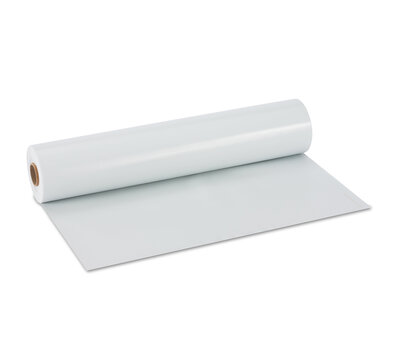

NEXALON TPO 1.5 WITHOUT REINFORCEMENT is a synthetic membrane made of TPO polyolefin, manufactured by extrusion. It is weather- and UV-resistant.
Scope
- Used for the finishing and formation of finishes at singular points of the roof (protruding or incoming angles, corners, drainage cups, skylights, pipe exits, masts, etc.) on flat roofs made with NEXALON TPO type membranes.
Advantages & Benefits
- High movement capability.
- High tensile strength.
- High resistance to piercing.
- Great elasticity.
- Very high durability with respect to possible degradation due to chemical causes.
- Very good resistance to micro-organisms, rot, mechanical impact, natural ageing and swelling.
- Allows for adaptation to any type of geometry.
- Has good piercing protection from possible mechanical damage, derived from the occasional pedestrian traffic typical of flat roofs.
Instruction for Use
Preparation of the substrate:
- The surface of the base substrate shall be resistant, uniform, smooth, clean, dry and free of foreign bodies. In the case of thermal insulation, the boards shall be laid in a grid and without gaps of more than 1 mm between boards.
- Polyester geotextiles, type DANOFELT PY 300 or higher, shall be used as a separating or protective layer.
- Before the membrane is laid out, the membrane shall be mechanically fastened to the horizontal plane and to the vertical face. In the event that the sheet experiences a dimensional stability variation ≤ 0.09%, anchoring to the horizontal plane would not be necessary.
- The horizontal plane profile shall be installed as close as possible to the angle and shall never be located at a distance greater than 20 cm from the confluence or junction. In the vertical plane the profile is fixed so that the membrane rises a minimum of 20 cm above the surface of the pavement. The membrane is welded to the profile in the horizontal plane. A strip of sheeting is then welded to the profile of the vertical facing and overlapped and welded to the membrane in the horizontal plane. In this solution, the sheeting that goes up the vertical face must have the same characteristics as that of the horizontal plane.
- The joint between the profile fixed to the facing, and the masonry facing, is always sealed with an elastic and rot-proof mastic.
- Where the roof meets vertical faces and elements passing through the membrane, the membrane must rise at least 20 cm above the level of the finished roof, or higher if necessary, so that the upper edge of the membrane is always above the maximum foreseeable water level on the roof.
- Point drains and ventilation pipes must be located at least 50 cm away from any protruding roof elements (vertical walls, coffers, chimneys, etc.).
- The joint between sheets shall be made by means of thermoplastic welding, with a hot air welder. The overlaps shall be at least 5 cm and the welding of the lower sheet with the upper one shall be at least 4 cm. Immediately after welding, the joint shall be pressed with a roller, thus ensuring a homogeneous joint. To verify the joints, a physical check shall be made using a blunt metal needle (with a rounded tip with a radius between 1mm and 3mm), passing it along the edge of the joint.
Notice
- The information contained in this document and any other advice provided, are given in good faith, based on DANOSA's current knowledge and experience when products are properly stored, handled and applied, in normal situations and in accordance with the recommendations of DANOSA. The information applies only to the application (s) and the product (s) to which reference is expressly made. In case of changes in the parameters of the application, or in case of a different application, consult the DANOSA Technical Service before using the DANOSA products. The information contained herein does not exonerate the responsibility of the building agents to test the products for the application and intended use, as well as their correct application in accordance with current legal regulations. The product images used in our communications are indicative and may differ slightly in color and aesthetic appearance in relation to the final product.Orders are accepted in accordance with the terms of our current General Sales Conditions.DANOSA reserves the right to modify, without prior notice, the data reflected in this documentation.Website: www.danosa.com E-mail: info@danosa.com Telephone: +34 949 88 82 10
Presentation
- Length (cm): 1500
- Length measurement standard: EN 1848-2
- Width (cm): 105
- Width measurement standard: EN 1848-2
- Thickness (mm): 1.2
- Surface (m²): 15.75
- Colour: White
- Product code: 210800
Technical Data
| Concept | Value | Standard |
|---|---|---|
| Mass per unit area (nominal) (kg/m²) | 1.66 | - |
| Longitudinal elongation at break (%) | > 50 | - |
| Transversal elongation at break (%) | > 70 | - |
| External fire behaviour | Broof (t1) - Broof (t3) - Broof (t4) | EN 13501-5 |
| Longitudinal & transversal dimensional stability | < 0.3 | EN 1107-2 |
| Water vapour permeability (µ) | 47000 ± 30% | EN 1931 |
| Flexibility at low temperature (ºC) | < -30 | EN 495-5 |
| Reaction to fire | E | EN 13501-1 |
| Resistance to static loading (kg) | > 50 | - |
| Resistance to root penetration | Pasa | EN 13948 |
| Longitudinal & transversal tensile strength (N/5cm) | > 1000 | EN 12311-2 Método A |
| Longitudinal resistance to tearing (nail shank) (N) | > 200 | EN 12310-2 |
| Transversal resistance to tearing (nail shank) (N) | > 200 | EN 12310-2 |
| Resistance to impact, A (mm) | > 500 | EN 12691 |
| Overlaps resistance (Shear of overlaps) (N/50mm) | > 800 | EN 12317-2 |
| Overlaps resistance (Peeling of overlap) (N/50mm) | > 250 | EN 12316-2 |
| Hazardous substances | PND | - |
| Emissivity | 0,86±0,02 | ASTM C1371-04a(2010)e1 |
Addtitional Technical Data
| Concept | Value | Standard |
|---|---|---|
| Visible defects | Pasa | EN 1850-2 |
| Nominal minimum thickness | 1.2 (-5%; +10%) | EN 1849-2 |
| Mass (kg/m²) | 1,6 (-5%; +10%) | EN 1849-2 |
| Loss of elongation at break (UV 5000 h) | < 10< 10 | EN 1297, EN 12311-2EN 1297, EN 12311-2 |
| Loss of plasticizers (mass change at 30 days) (%) | < 4.5 | EN ISO 177 |
| Flatness (mm) | < 10 | EN 1848-2 |
| Straightness (mm) | < 50 | EN 1848-2 |
| Hail resistance (soft Support) (m/s) | 50 | - |
| Hail resistance (hard support) (m/s) | 28 | EN 13583-2012 |
Standards and Certification
- In accordance with the UNE-EN 13956 standard for flexible sheets for waterproofing. Plastic and rubber sheets for waterproofing roofs.
Environmental Information
| Concept | Value | Standard |
|---|---|---|
| Post-consumer recycled content (%) | NDP | - |
| Pre-Consumer recycled content (%) | NDP | - |
| Manufactured in | Fontanar - Guadalajara (España) | - |
Downloads

Agenda cita con un técnico de Danosa