
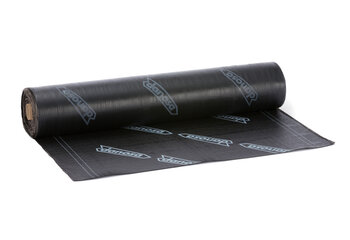
ESTERDAN 30 P ELAST
Tough SBS elastomeric 3 kg/m² underlay. Torch applied.
Product variations:


 BBA 10/4787 (PS1)
Bituminous SBS modified membrane reinforced with a non-woven polyester felt.
Finished with a quick-melt thermofusible film.
Scope
- Buried structures.
- Bottom or top sheet in two-layer systems for waterproofing of roofs with heavy bonded, unbonded or floating protection.
- Tanking membrane.
Advantages & Benefits
- High resistance to static and dynamic piercing.
- Self-healing and rot-proof.
Support
- Roofs with heavy bonded protection.
- Bonded buried structures.
Instruction for Use
1. Substrate should be dry and clean from grease, dirt, debris or any other contaminants.
2. Where applicable, prime surface with CURIDAN or bitumen primer+ in accordance with DANOSA instructions and allow to dry.
3. For field applications:
A. Roll the membrane into position, allowing for 80mm side overlaps and100mm head overlaps and cut to length. All overlaps and cross joints should be staggered by a minimum of 300mm.
B. Using a length of 100mm ø pipe (cut fractionally short of roll width) as an insert tube, roll back the membrane for a portion of the length (approximately 50%).
C. Heat activate the membrane by torching in a vee area between the roll and substrate.
D. Roll can be pushed forward by foot or by other suitable equipment. Apply downwards pressure when moving the roll to extrude a molten bead of bitumen from edges.
4. For detail applications
A. Place the membrane into position, allowing for 80mm side overlaps and100mm head overlaps and cut to length ensuring all overlaps and cross joints are staggered by a minimum of 300mm.
B. Heat activate the membrane by torching between the membrane and substrate.
C. Apply pressure and consolidate the bond to the substrate, ensuring a molten bead of bitumen is extruded from the edges.
Where falls apply, membrane rolls should be rolled up the slope so that water drains over and not into membrane overlaps.
2. Where applicable, prime surface with CURIDAN or bitumen primer+ in accordance with DANOSA instructions and allow to dry.
3. For field applications:
A. Roll the membrane into position, allowing for 80mm side overlaps and100mm head overlaps and cut to length. All overlaps and cross joints should be staggered by a minimum of 300mm.
B. Using a length of 100mm ø pipe (cut fractionally short of roll width) as an insert tube, roll back the membrane for a portion of the length (approximately 50%).
C. Heat activate the membrane by torching in a vee area between the roll and substrate.
D. Roll can be pushed forward by foot or by other suitable equipment. Apply downwards pressure when moving the roll to extrude a molten bead of bitumen from edges.
4. For detail applications
A. Place the membrane into position, allowing for 80mm side overlaps and100mm head overlaps and cut to length ensuring all overlaps and cross joints are staggered by a minimum of 300mm.
B. Heat activate the membrane by torching between the membrane and substrate.
C. Apply pressure and consolidate the bond to the substrate, ensuring a molten bead of bitumen is extruded from the edges.
Where falls apply, membrane rolls should be rolled up the slope so that water drains over and not into membrane overlaps.
Indications and Important Recommendations
- Not suitable for single layer waterproofing.
- Not suitable as cap sheet on green roofs; use GARDEN variant.
- A separating layer (DANOFELT or DANODREN) shall be laid before laying the heavy protection (paving, gravel, topsoil, etc).
- If expansion that could affect the sheet is expected, a geotextile separating layer (DANOFELT PY 200) shall be used between the sheet and the extruded polystyrene insulation panels, so that each product expands independently.
Maintenance Recommendations
- Please refer to DANOSA UK Technical Statement ‘Flat Roof Waterproofing – Cleaning and Maintenance Recommendations’.
Handling, storage and preservation
- Before moving the pallet, check the condition of the shrink-wrap and reinforce if necessary.
- The product must be stored in a dry place protected from rain, sun, heat and low temperatures.
- The product must be stored in an upright position.
- This product should not be installed when the temperature is below -5ºC.
- Pallets shall not be stacked on top of each other.
Notice
- The information contained in this document and any other advice provided, are given in good faith, based on DANOSA's current knowledge and experience when products are properly stored, handled and applied, in normal situations and in accordance with the recommendations of DANOSA. The information applies only to the application (s) and the product (s) to which reference is expressly made. In case of changes in the parameters of the application, or in case of a different application, consult the DANOSA Technical Service before using the DANOSA products. The information contained herein does not exonerate the responsibility of the building agents to test the products for the application and intended use, as well as their correct application in accordance with current legal regulations. The product images used in our communications are indicative and may differ slightly in color and aesthetic appearance in relation to the final product.Orders are accepted in accordance with the terms of our current General Sales Conditions.DANOSA reserves the right to modify, without prior notice, the data reflected in this documentation.Website: www.danosa.com E-mail: info@danosa.com Telephone: +34 949 88 82 10
Presentation
- Length (cm): 1200
- Width (cm): 100
- Thickness (mm): 2.5
- Surface (m²): 12
- Product code: 141130
Technical Data
| Concept | Value | Standard |
|---|---|---|
| Mass per unit area (nominal) (kg/m²) | 3 | - |
| Density (kg/m³) | 1200 | - |
| External fire behaviour | Broof(t1) | UNE-EN 1187; UNE-EN 13501-5 |
| Durability flexibility | -5 ± 5 | - |
| Creep durability (ºC) | 100 ±10 | UN-EN 1110 |
| Longitudinal traction durability (N / 5cm) | 700 ± 200 | - |
| Transversal tensile durability (N/5cm) | 450 ± 150 | - |
| Elongation at break longitudinal (%) | 45 ±15 | UNE-EN 12311-1 |
| Elongation at transverse break (%) | 45 ±15 | UNE-EN 12311-1 |
| Watertightness at 10 kPa (Type A) | Pasa | UNE-EN 1928 |
| Watertightness at 60 kPa (Type A) | Pasa | UNE-EN 1928 |
| Water vapour resistance factor (μ) | 20.000 | UNE-EN 1931 |
| Low temperature flexibility (ºC) | <-15 | UNE-EN 1109 |
| Reaction to fire | E | UNE-EN 11925-2; UNE-EN 13501-1 |
| Resistance to static loading (kg) | >15 | UNE-EN 12730 |
| Resistance to root penetration | No Pasa | UNE-EN 13948 |
| Longitudinal tensile strength (N / 5cm) | 700 ± 200 | UNE-EN 12311-1 |
| Transverse tensile strength (N / 5cm) | 450 ± 150 | UNE-EN 12311-1 |
| Longitudinal resistance to tearing (nail shank) (N) | 220 ±40 | UNE-EN 12310-1 |
| Transversal resistance to tearing (nail shank) (N) | 220 ±40 | UNE-EN 12310-1 |
| Resistance to impact, A (mm) | >900 | UNE-EN 12691 |
| Resistance to impact, B (mm) | >900 | - |
| Joint Strength: Welding Shear | 450 ±150 | UNE-EN 12317-1 |
| Hazardous substances | PND | - |
Addtitional Technical Data
| Concept | Value | Standard |
|---|---|---|
| Adhesion of granules (%) | NPD | UNE-EN 12039 |
| Dimensional stability at elevated temperatures (longitudinal) (%) | <0.6 | UNE-EN 1107-1 |
| Dimensional stability at high temperatures (transversal) (%) | <0.6 | UNE-EN 1107-1 |
| Creep resistance at high temperatures (ºC) | >100 | UN-EN 1110 |
Standards and Certification
- DTA “ POLYDAN JARDÍN”.
- BBA 10/4787 Product Sheet 1 "GLASDAN ELAST, ESTERDAN ELAST AND POLYDAN ELAST ROOF WATERPROOFING MEMBRANES".
- DIT 550R/16 "ESTERDAN PENDIENTE ZERO".
- DIT 567R/16 "ESTERDAN - SELF DAN - POLYDAN UNDERGROUND STRUCTURES".
- DTA 5/09-2088 "Glasdan ELAST-Esterdan ELAST-Polydan ELAST".
- Application Document DA39/2013.
Environmental Information
| Concept | Value | Standard |
|---|---|---|
| Volatile organic compounds (COV's) (µg/m³) | 50 (A+) | ISO 16000-6:2006 |
| Post-consumer recycled content (%) | 35 | - |
| Manufactured in | Fontanar - Guadalajara (España) | - |
Downloads
Product-related solutions


SYSTEM
DANOPOL HSF

SYSTEM
DANOPOL HS

SYSTEM
DURADAN

POLYDAN SYSTEM
POLYDAN

SYSTEM
DANOFORCE

SYSTEM
DANOFORCE OVERLAY